
Unified Finance Management System
Track income, expenses, invoices, and accounts in one secure place. Gain clear visibility, faster closing, and accurate reports for every branch with zero manual errors.

DRIVING SMARTER HR
Smart Accounting with Real-Time Insights
See every transaction clearly, keep books accurate, and make confident financial decisions with live data across departments
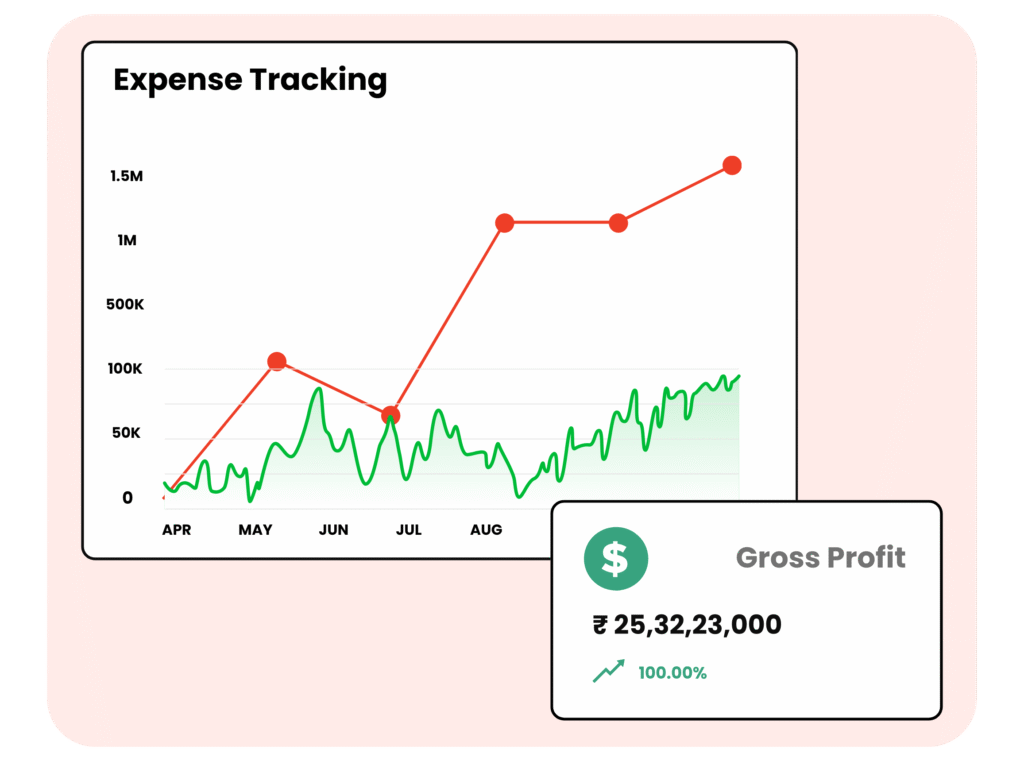
Track Every Transaction from Start to Finish
Business i shows money movement across sales, purchases, and payments in real time, giving you complete financial transparency.
- Real time income and expense tracking for better planning
- Auto updated ledgers and journals without manual errors
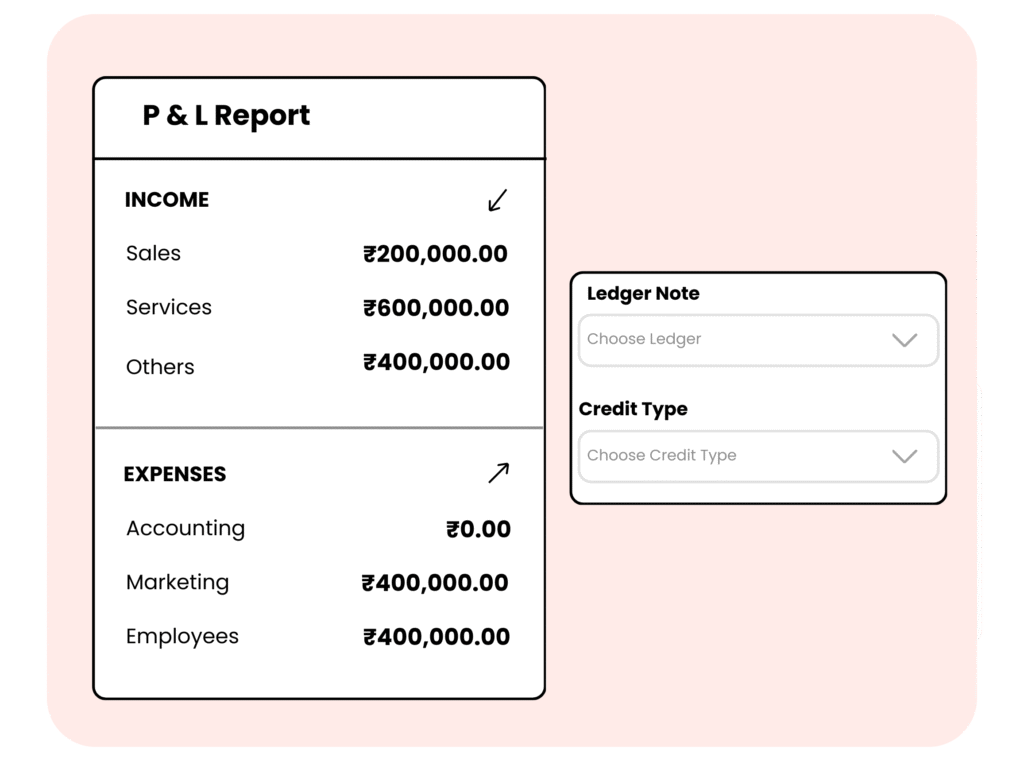
- Instant balance sheet and profit and loss at any time
Create a Smooth Billing Experience
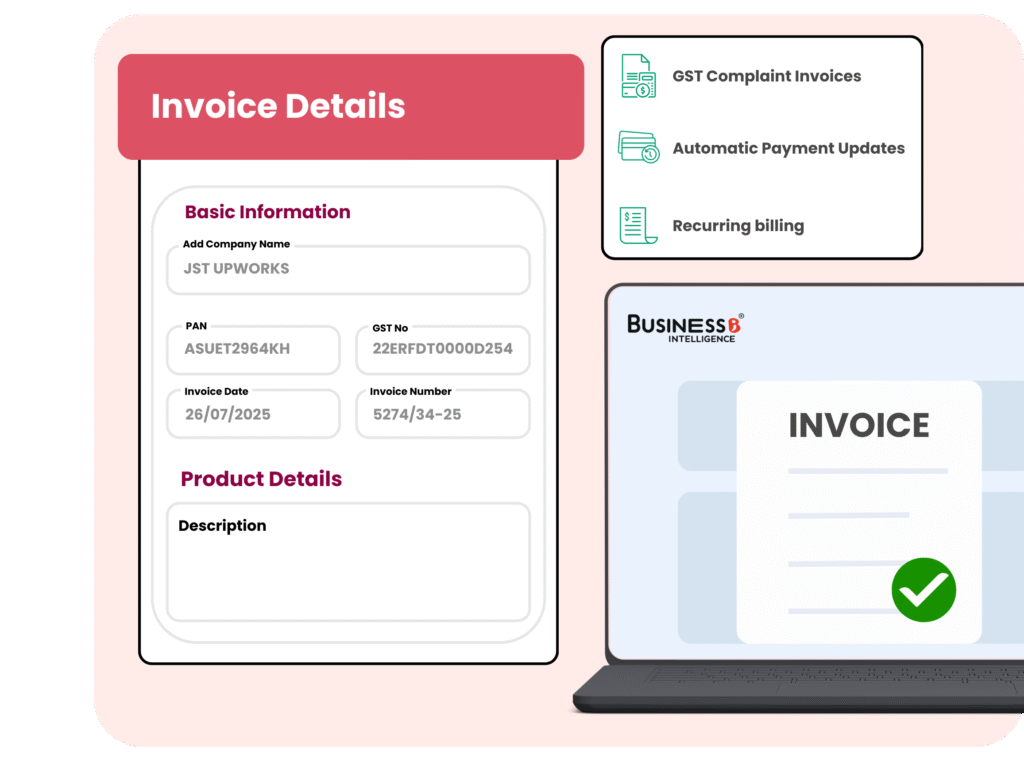
Make invoicing simple for your team and professional for your customers with faster approvals.
- GST compliant invoices in seconds with branding options
- Automatic payment status updates for on time collections
- Recurring billing with reminders to avoid missed payments
Manage All Accounts with Ease
Handle customers, vendors, banks, and petty cash from one place with accurate records.
- Debit and credit notes with proper history tracking
- Purchase bills with due date alerts for timely payments
- Project wise and channel wise accounts for deeper insights
Designed for Multiple Locations
See branch wise performance with a single consolidated view and avoid duplicate entries.
- Real time sync across branches for smooth operations
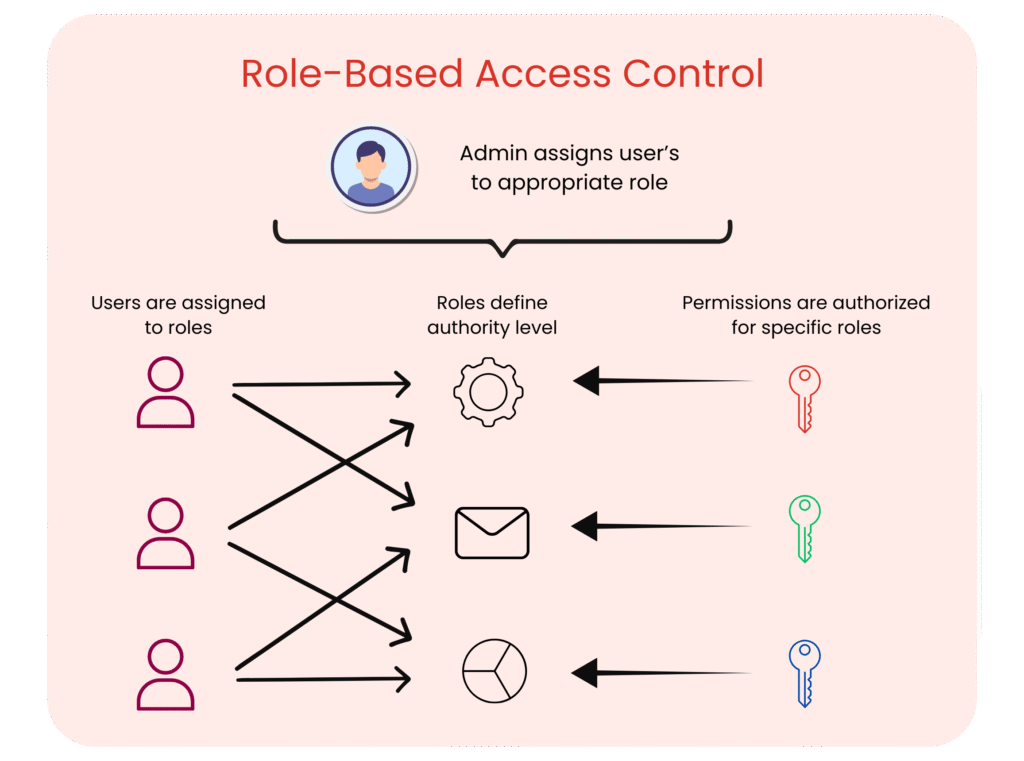
- Role based access and approvals to secure accounts
- Works on mobile, tablet, and desktop without limits
Why Choose Business i for Finance Management?
Account Management
Record all accounts in one place and track income, expenses, and balances with ease and accuracy
Debit & Credit Notes
Manage returns easily with accurate records and real-time financial updates.
Cash Transaction Log
Monitor all incoming and outgoing transactions with ease. Gain clear visibility into your cash flow and spending patterns.
Real-Time Reports
Access real-time insights into your business income and expenses. Stay informed with up-to-date financial data anytime you need it.
Invoice Management
Easily generate and share GST-compliant invoices in seconds. Track invoice status and payments from a single, unified screen.
Auto Billing
Create bills that include correct tax rates and payment breakdowns. Ensure every transaction is clear & ready for records.
Frequently Asked Questions
In general, an ERP financial module is a piece of software that collects financial data and then generates reports. It enables you to communicate financial information to external partners such as vendors and customers more clearly when necessary.
Accounts payable, accounts receivable, general ledger, budgeting, and other functions can help you achieve financial management.
The finance module is typically the first module to be enabled in an ERP system, which is why businesses switch from standalone accounting software to ERP. combining the financial resources of the many businesses operations
All of a company’s financial transactions are detailed in the General ledger. It keeps tabs on assets, liabilities, capital accounts, and revenue and costs, among other things.
Business i ERP simplifies expense management by allowing you to record, categorize, and track all business expenses in real-time. It provides clear visibility into spending patterns through detailed reports and dashboards, helping you stay within budget and make smarter financial decisions.